
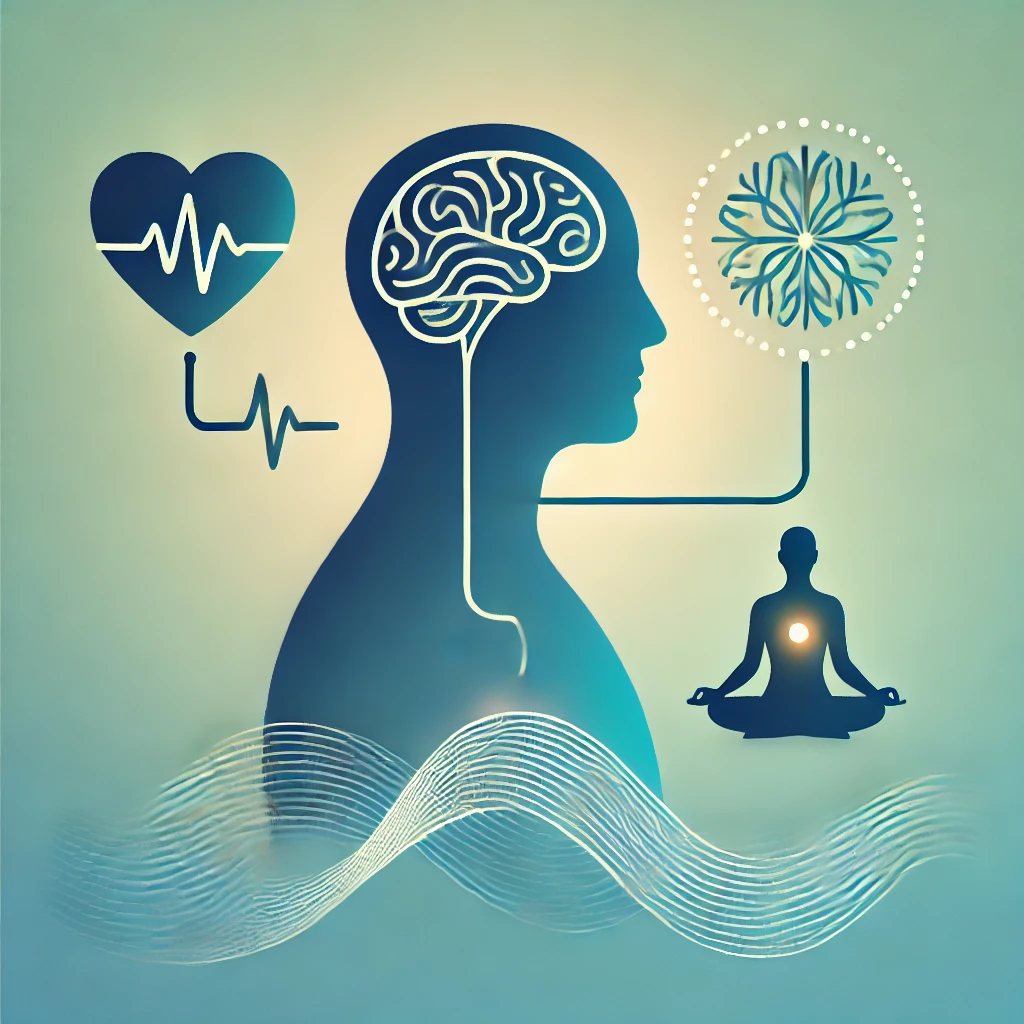
COHERENCE BETWEEN MIND AND BODY
What is psychophysiological coherence?
Imagine your body as an orchestra, with each part—the heart, brain, muscles and breath—playing an instrument. When they all play together in harmony, you feel calm, focused and full of energy. If one instrument falls out of rhythm, everything becomes chaotic and you feel stressed.
1. Respiratory coherence: breathing and heart as dancers
Your breath and heart are like two dancers. When they move at the same rhythm, everything feels fluid and relaxed. With slow, deep breathing, the heart follows the rhythm and you feel calmer.
- Practical example
After a stressful day, sit and breathe slowly- Inhale for 4 seconds.
- Hold for 4 seconds.
- Exhale for 6 seconds.
Repeat for 5 minutes. It is like “retuning” your body and bringing it back into balance.
2. Brain-body coherence: the brain as an orchestra conductor
The brain directs everything, from muscles to emotions. When your brain and body work together, you’re relaxed and coordinated.
- Practical example
If you feel tension in your shoulders after spending hours at the computer- Close your eyes and imagine your brain “talking” to your shoulder muscles.
- Relax them slowly, letting them fall like a feather.
- Repeat three times, like a conductor adjusting the volume of an instrument.
3. Brain wave coherence: the brain as a radio
Brain waves are like radio stations. When they are well tuned, you feel calm and focused. When they are disorganized, it is like listening to a radio through static.
- Practical example
Before an important examination or task- Close your eyes.
- Visualize your brain as a radio.
- Imagine “turning the dial” to find the right station, one that conveys calm and concentration.
Take deep breaths as you do so.
4. Muscle coherence: muscles like guitar strings
Muscles are like guitar strings: if they are too tight they sound wrong, while if they are too loose they do not work properly. With the right balance, every movement becomes harmonious.
- Practical example
- If you have tension in your back
- Lie down and imagine your back muscles as guitar strings.
- Gently contract the muscles for five seconds, then relax them as though you were “loosening” the strings.
- Repeat for every tense area.
5. Electrodermal coherence: skin as an emotional thermometer
The skin reflects stress like a thermometer. When you are calm, it is cool and dry; when you are agitated, it may become sweaty. You can learn to recognize these reactions.
- Practical example
Before an interview or stressful situation:- Note if your hands are sweaty or warm.
- Place them on a cool surface, breathe slowly and imagine “extinguishing” the tension as you would blow out a candle.
6. Gut–brain coherence: the gut as the second brain
Your gut communicates with your brain. When it is calm, your mood also improves. Eating slowly and mindfully strengthens this connection.
- Practical example
During meals:- Chew every bite at least 20 times.
- Focus on the taste and imagine the food “talking” to your gut and bringing it a sense of calm.
This slows the pace of eating and supports digestion.
7. Emotional coherence: the heart as a drum
Emotions are like the rhythm of a drum. When they are synchronized with the body (breath and heart), you feel stable. If the pace is too fast, you feel overwhelmed.
- Practical example
If you feel overwhelmed:- Think about a happy moment (as a positive memory).
- As you breathe deeply, imagine your heart beating slowly and in time with that memory.
This brings the drum back to its natural rhythm.
Conclusion
Training these forms of coherence is like tuning an orchestra: when all the instruments are in tune, the music—your body and mind—sounds harmonious, helping you feel serene and full of energy.