
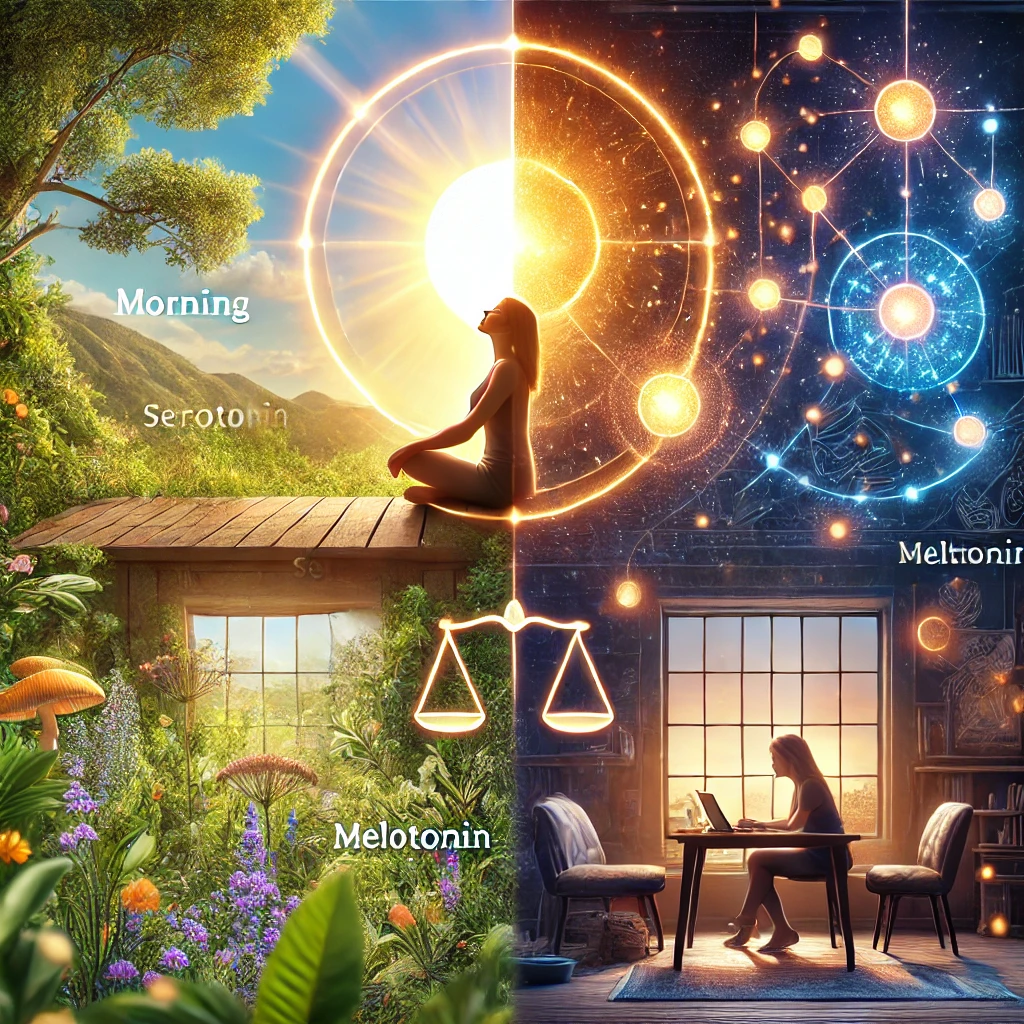
Sunlight by day, darkness by night: the secrets of well-being
Sunlight exposure during the day
- Regulation of circadian rhythm:
- Natural light, in particular the blue light of the sun, stimulates the photoreceptors in the eye that communicate with the hypothalamus (specifically the suprachiasmatic nucleus, or SCN), our “biological clock”.
- This signals to the body that it is daytime, synchronizing the circadian rhythms with the natural cycle of light and darkness.
- Production of serotonin:
- Sun exposure stimulates the production of serotonin, a neurotransmitter that promotes good mood and feeling of well-being.
- Serotonin is a precursor of melatonin, the sleep hormone, which is produced when light decreases.
- Improvement of mood:
- Exposure to sunlight is associated with a reduction in the risk of seasonal affective disorder (SAD) and improved overall vitality.
- Metabolic regulation:
- Sunlight helps regulate hormones that affect metabolism and energy expenditure.
Reducing light exposure in the evening
- Increased melatonin production:
- The decrease in light exposure, especially blue light (emitted by screens and LED lamps), allows the body to start producing melatonin, which promotes deep, restorative sleep.
- Reduction of cortisol:
- A decrease in exposure to light signals the body to lower cortisol levels, the stress hormone, promoting relaxation.
- Improved sleep:
- Sleeping in a dark environment improves sleep quality, positively affecting memory, learning, cell regeneration and immune health.
Effects on hunger and satiety mechanisms
- Regulation of appetite hormones:
- Circadian rhythms influence the production of ghrelin (the hunger hormone) and leptin (the satiety hormone). A misaligned circadian rhythm can cause disruptions that increase the feeling of hunger and reduce satiety.
- A good circadian balance improves the body’s response to hunger and satiety signals, reducing the likelihood of overeating.
- Reduced nighttime cravings:
- Excessive exposure to artificial light in the evening can alter the circadian rhythms, increasing the likelihood of seeking foods rich in sugar and fat at night.
- Synchronization of metabolism:
- Metabolism follows a circadian rhythm, with digestion and nutrient absorption working most efficiently during the day. Exposure to natural light helps the body regulate its energy use more effectively.
Other general benefits
- Support for vitamin D synthesis: indispensable for strong bones, immune system and cardiovascular health.
- Reduced risk of chronic diseases: well-regulated circadian rhythms are associated with a reduction in the risk of obesity, type 2 diabetes and cardiovascular diseases.
- Improvement of cognitive performance: a good regulation of the circadian rhythm optimizes attention and concentration during the day.
Practical advice
- Sun exposure in the morning:
- Spend at least 20-30 minutes in the sun, preferably shortly after waking, to adjust the circadian rhythm.
- Avoid artificial light in the evening:
- Turn off or reduce intense lighting after sunset, use warm lighting and set night modes on screens.
- Create a dark environment for sleep:
- Use blackout curtains and turn off light sources in the bedroom.
- Follow a regular schedule:
- Keep regular meal and sleep times aligned with the natural day-night cycle.
These habits can significantly contribute to overall well-being, improving both physical and mental health.