
BIOFEEDBACK PARADOXES
Counterintuitive results in psychophysiological training
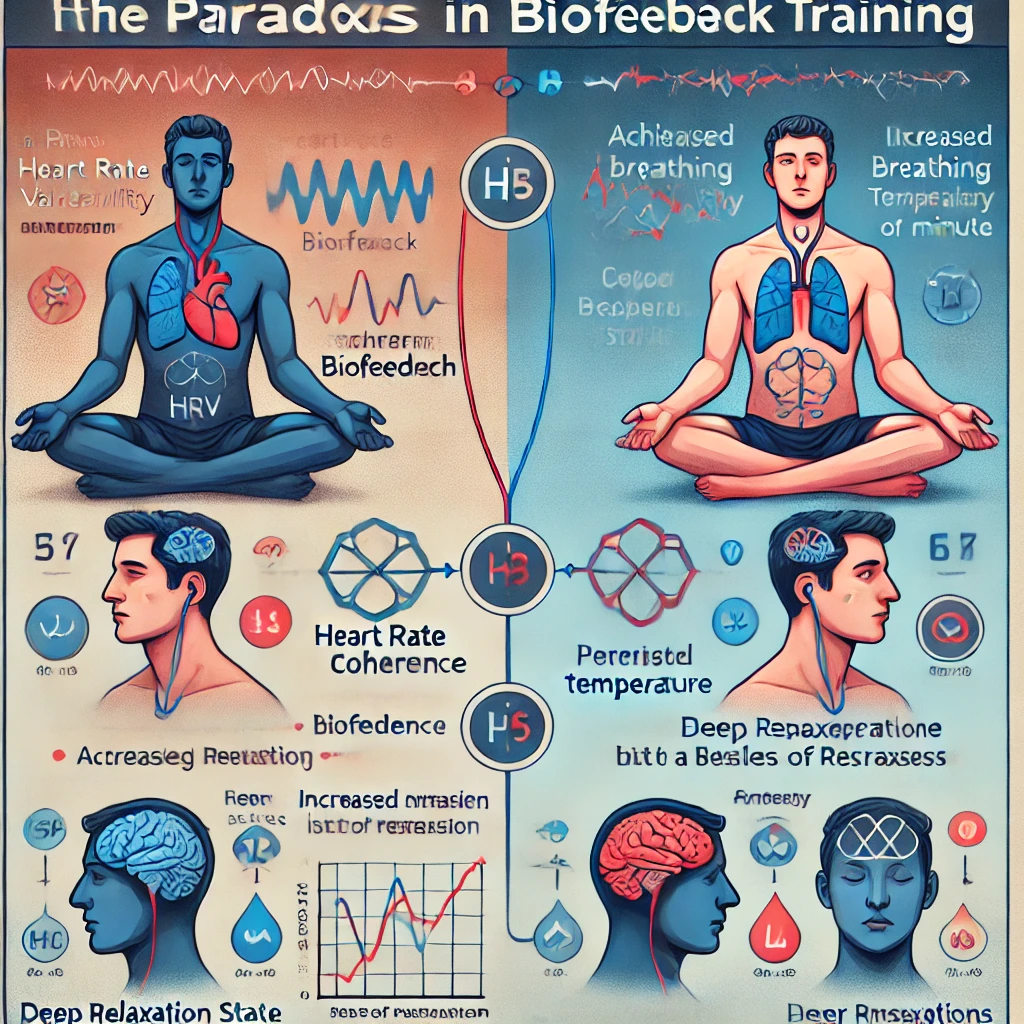
📊 Biofeedback measures physiological parameters like HRV (heart rate variability), GSR (skin conductance), respiratory rate, peripheral temperature and muscle tension. But sometimes the results do not match expectations.
1️⃣ High cardiac coherence, but elevated activation (the HRV paradox)
-
The participant achieves cardiac coherence by breathing at 6 cycles per minute.
-
However, sympathetic activation increases instead of decreasing.
-
Possible explanations:
✅ The body is still adapting to the coherent-breathing pattern → the autonomic nervous system may need time.
✅ The subject is too focused on the process and becomes overly controlling → paradoxically generates stress.
✅ The selected breathing rate is not optimal for their nervous system → each person has a unique resonance frequency.
2️⃣ A rate of 6 cycles per minute, but HRV does not improve
-
The subject follows the breathing protocol, but HRV remains low.
-
Possible explanations:
✅ Some individuals have a slightly different resonance rhythm (e.g. 5.5 or 6.5 cycles/min).
✅ Involuntary muscle tension interferes with the relaxation of the diaphragm and reduces the effectiveness of breathing.
✅ Metabolic or hormonal dysfunction (e.g. thyroid problems, high cortisol) may limit the HRV response.
3️⃣ Increased peripheral temperature, but increased perceived stress
-
The subject uses biofeedback to increase hand temperature (a sign of parasympathetic activation), but reports greater anxiety.
-
Possible explanations:
✅ Physiological relaxation can activate repressed thoughts or unprocessed emotions.
✅ The subject interprets the physiological effect as loss of control, increasing vigilance.
4️⃣ Deep relaxation leads to a sense of anxiety or dissociation
-
After a biofeedback session to reduce stress, the subject feels more anxious or detached from reality.
-
Possible explanations:
-
✅ The brain is not used to a state of calm and perceives the reduction of stress as abnormal.
✅ Some individuals with trauma or PTSD experience dissociative states when the nervous system enters a state of deep parasympathetic activation.