
Why do hands and feet become cold during stress?
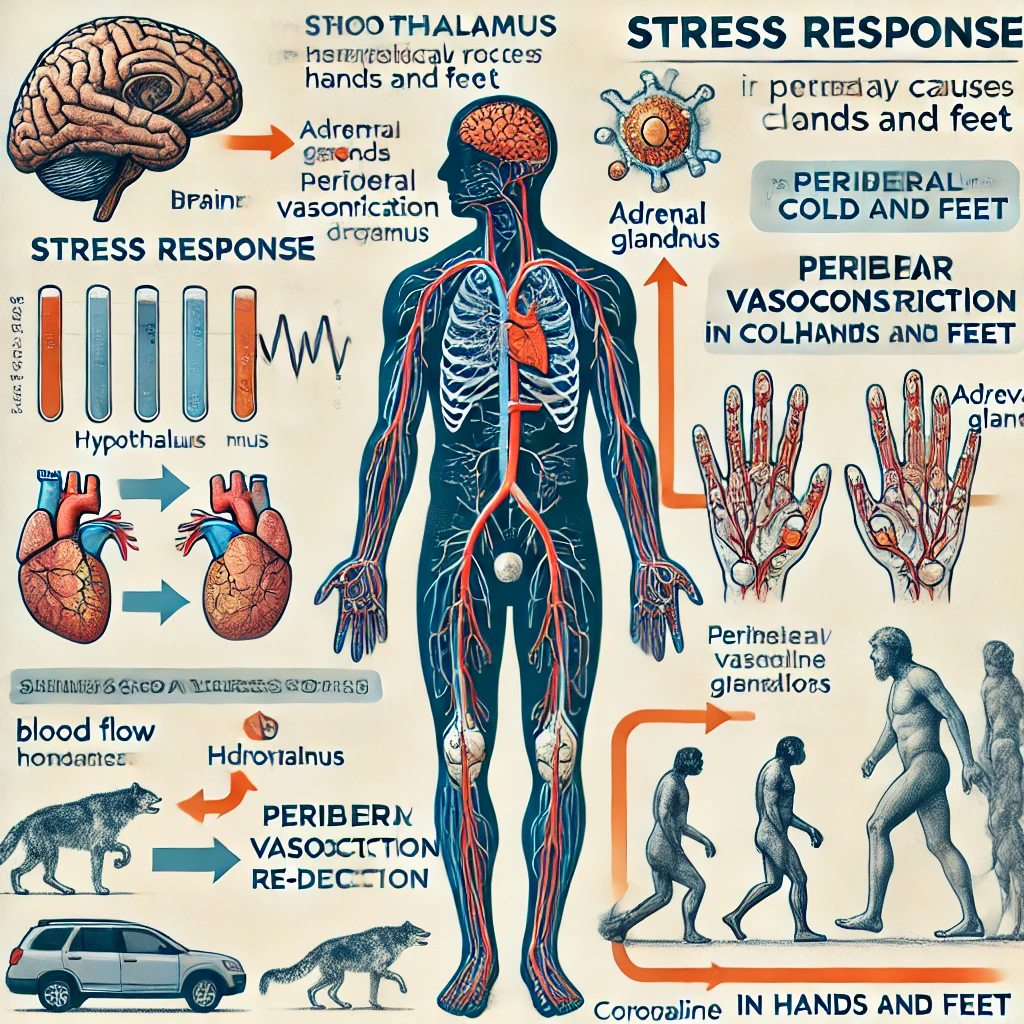
The Physiological Response to Stress: An Evolutionary Protection
Why do hands and feet become cold during stress?
Cold hands and feet are common during stressful situations. This happens because the body activates a natural physiological response to circumstances it perceives as dangerous. The mechanisms, causes and possible remedies are described below, with support from scientific references.
Physiological mechanism
- Sympathetic Nervous System Activation
When you are under stress, the sympathetic nervous system activates as part of the “fight-or-flight” response (fight or flight). This response is regulated by the hypothalamus, a brain region that sends signals to the adrenal glands to release stress hormones such as adrenaline and cortisol. These hormones:
- They increase heart rate.
- They increase blood flow to the main muscles (for example, legs and arms to support fighting or fleeing).
- They temporarily reduce “non-essential” functions, such as digestion and peripheral circulation.
- Peripheral vasoconstriction
One of the main effects of the stress response is vasoconstriction, the narrowing of peripheral blood vessels in the hands and feet. This process:
- Reduces blood flow to the extremities to preserve blood and oxygen for vital organs and muscles involved in the emergency response.
- Causes a decrease in the perceived temperature of the hands and feet, which feel cold to the touch.
- Reduced body heat in the extremities
With less blood flow, less body heat reaches peripheral areas. This can cause a feeling of cold, often accompanied by pallor or, in extreme cases, by a bluish color of the fingers.
Why does it happen specifically during stress?
The “fight-or-flight” response is activated not only in the presence of a physical threat, but also in situations of psychological stress. For example:
- Work stress or exams.
- Social anxiety or situations of strong emotional pressure.
- Financial or family problems.
The body does not distinguish between physical stress (such as an imminent danger) and psychological stress. In both cases, it activates the same physiological response.
Evolutionary perspective
From an evolutionary point of view, this response was crucial to human survival. Our ancestors lived in environments full of physical threats, such as predators or extreme weather conditions. The “fight or flight” response enabled the rapid mobilisation of energy and resources to address these immediate challenges. Peripheral vasoconstriction, in particular, reduced the risk of excessive bleeding in the event of injuries to the extremities, increasing the chances of survival. However, in modern contexts, where most stressors are psychological, this reaction may be less useful and sometimes counterproductive.
Associated side effects
- Tingling or numbness
The reduction of blood flow can cause a feeling of tingling or numbness, especially if stress is prolonged.
- Pallor
Hands and feet may appear pale or blue due to the decrease in blood flow.
- Muscular fatigue
The reduced oxygen supply to the extremities can cause muscle weakness or cramps.
Remedies to counter the problem
- Relaxation techniques
Practising relaxation techniques can help calm the sympathetic nervous system and improve circulation:
- Diaphragmatic breathing: inhale deeply using the diaphragm to slow your heartbeat and reduce stress.
- Meditation or mindfulness: techniques that help maintain calm and reduce anxiety.
- Yoga: A combination of movement, breathing and meditation that can improve relaxation.
- Physical warming
- Massage hands and feet to stimulate circulation.
- Use warm gloves or socks to maintain peripheral body temperature.
- Nutrition and hydration
- Maintain good hydration to promote blood flow.
- Eat foods rich in magnesium, which help to relax blood vessels, and vitamin C, which improves the health of capillaries.
- Reduce chronic stress
- Organise your days to avoid excessive workloads.
- Seek professional psychological support if stress persists.
Related medical conditions
In some cases, cold hands and feet may be a symptom of underlying medical conditions:
- Raynaud’s phenomenon: a condition in which stress or low temperatures cause excessive vasoconstriction in the extremities.
- Circulatory problems: such as atherosclerosis or varicose veins.
- Hypothyroidism: reduced thyroid activity that slows down metabolism and can cause chronically cold extremities.
If symptoms are persistent or severe, consult a physician.