
MyoScan: An Advanced Tool for Reducing Muscle Tension
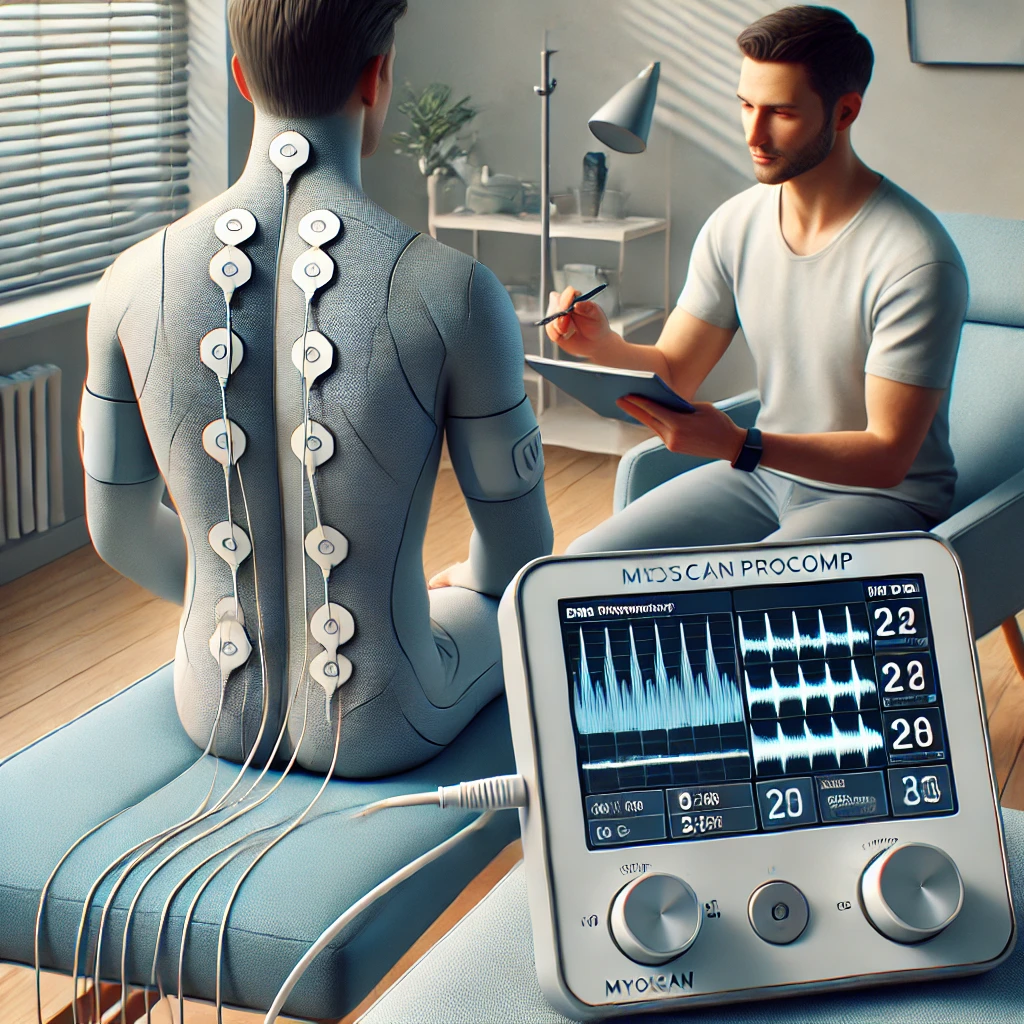
From tension to relaxation…
Electromyography (EMG) is a diagnostic and therapeutic technique used to record the electrical activity produced by the muscles when they contract. By placing electrodes on the skin surface or inside the muscle, it is possible to monitor muscle tension in real time and identify any dysfunctions. This technology underpins devices like the MyoScan ProComp, which stands out for its effectiveness in assessing and reducing muscle tension.
What does EMG measure?
EMG records:
-
Muscle tension at rest and during activity: useful for identifying chronic stiffness or excessive muscle tone.
-
Muscle responses to stimuli: show how muscles react to specific movements or stress conditions.
-
Relaxation capacity: an important parameter for patients with stress disorders, chronic pain or somatic dysfunction.
The role of MyoScan ProComp
The MyoScan ProComp is an advanced device that uses EMG biofeedback to:
-
Real-time monitoring: the data collected are displayed in the form of graphs, allowing a detailed analysis of muscle tension.
-
Patient feedback: Through visual and auditory signals, it helps the patient to recognize and consciously reduce muscle tension.
-
Versatile Applications: It is used in various contexts, including:
-
Post-traumatic or post-operative rehabilitation.
-
Chronic pain management (back pain, neck pain, etc.).
-
Management of stress-related disorders (anxiety, insomnia, etc.).
-
Improvement of sports or work performance.
-
Main Benefits of MyoScan ProComp
-
Muscle stress reduction: biofeedback enables targeted muscle relaxation, reducing the accumulated tension.
-
Improved posture: identifies muscle imbalances, promoting better body alignment.
-
Educational effect: the patient learns tension management techniques, improving body awareness.
-
Documented progress: thanks to data logging, progress can be monitored over time and therapies can be personalized.
Practical applications
-
In physical rehabilitation: to help patients recover muscle control after injury or surgery.
-
In chronic pain management: reducing tension that contributes to back pain, tension headaches and other forms of somatic pain.
-
In sports: to optimize muscle activation and prevent overuse injuries.
-
In psychotherapy: as an aid in managing psychosomatic disorders or stress-related disorders.
Conclusions
EMG and MyoScan ProComp are powerful tools to promote physical and mental well-being, thanks to their ability to monitor and reduce muscle tension. The combination of advanced technology and customized approaches makes it possible to address a wide range of issues, promoting a better quality of life.