
Understanding the Nervous System and the Importance of Relaxation: A Story Told Through Metaphors…
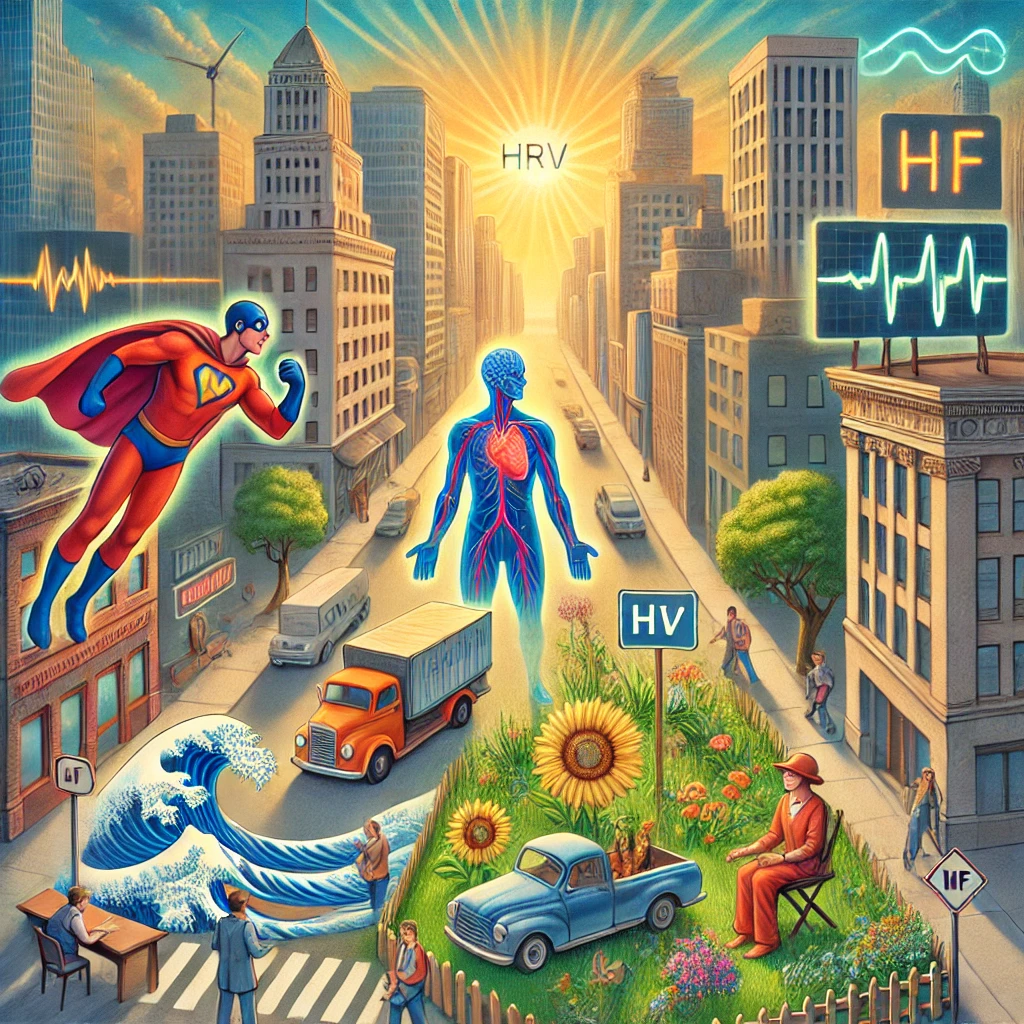
Imagine your body as a large city. The nervous system is the mayor that coordinates everything: traffic, lights, and even when it is time to take a break.
The nervous system: the mayor of the city
-
Sympathetic system: the “superhero” in action
-
When an emergency occurs, the superhero springs into action: turning on all the lights, sounding the sirens and speeding up traffic. This is the sympathetic nervous system, which engages when we must deal with something urgent, such as running to catch a bus or tackling a difficult task at school.
-
Effect on the body:
-
The heart beats faster.
-
Your breathing becomes faster.
-
The muscles prepare for action.
-
-
-
Parasympathetic system: the “gardener” of peace
-
When everything calms down, the gardener arrives: turning off unnecessary lights, tending the flowers and bringing water to the fields. This is the parasympathetic nervous system, which helps us relax, rest and repair the body.
-
Effect on the body:
-
The heart slows down.
-
Breathing becomes deeper.
-
You feel calm and safe.
-
-
Why is relaxation important?
Imagine if the “superhero” was always in action, without ever stopping:
-
The city would be chaos: too many lights on, too much noise, traffic everywhere.
-
In the body, this is equivalent to chronic stress, which can lead to problems such as:
-
Strain on the heart.
-
Weak immune system (we get sick more easily).
-
Difficulty sleeping.
-
If instead the “gardener” works well, the city remains in balance:
-
Everything works at its best, and resources are conserved for when they are truly needed.
HRV: the Traffic Controller
Now imagine a traffic controller who decides how quickly or slowly the cars—the heartbeat—should move. This controller is called HRV (heart rate variability).
-
High variability (high HRV): the city is organized
-
When traffic adapts well (sometimes slow, sometimes fast), the city works better.
-
This happens when the sympathetic and parasympathetic nervous systems work together in balance.
-
A sign of health: you are calm and you can respond to unexpected events without stressing yourself too much.
-
-
Low variability (low HRV): blocked traffic
-
If traffic always moves at the same pace (too fast or too slow), the traffic controller is not doing a good job.
-
A sign of chronic stress or fatigue: you struggle both to relax and to respond effectively.
-
LF and HF: sea waves
Think of your heartbeat as waves at sea:
-
LF Waves (Low Frequency):
-
They are the large, powerful waves. They appear when the superhero—the sympathetic system—is in action.
-
Too much LF means that the body is stressed or on alert.
-
-
HF Waves (High Frequency):
-
They are smaller, gentler waves, like those you experience while relaxing on a beach; they are associated with parasympathetic activity.
-
Greater HF activity indicates that you are resting and recovering.
-
Balance between LF and HF:
-
As on a beautiful day by the sea, it is important to have waves of both types to live well.
Chaotic variability: crazy traffic
When the city is in disorder and traffic does not follow any rules, you have chaotic variability:
-
The heart cannot synchronize with breathing.
-
The nervous system doesn’t know if it has to relax or become active.
-
This often happens when we are stressed for too long without relaxing.
How relaxation helps reorganize the city
-
Deep Breathing: the Smart Traffic Light
-
When you breathe slowly and deeply, the traffic light controlling the heart becomes smarter.
-
This improves HRV and helps the gardener (parasympathetic) to work better.
-
-
Restful Breaks: Turning Off Unnecessary Lights
-
Stopping every now and then during the day is like turning off lights that are not needed: this uses less energy and helps the body to regenerate.
-
-
Calming Activities: Planting Flowers in the City
-
Practising yoga, listening to relaxing music or walking in nature is like adding gardens to the city: it makes everything more beautiful and healthy.
-
Remember: physical training activates the nervous system; it is not itself a relaxation technique! However, it still helps self-regulation, providing an outlet for excess energy and subsequently making relaxation easier.
-
Why is it important for the future?
If you let the “superhero” work too hard without ever stopping, the city (your body) will wear out:
-
A greater risk of heart problems, digestive difficulties and insomnia.
-
The gardener will not have enough energy to repair damage.
If you find a balance:
-
Your city will be strong and resilient, ready to handle challenges without collapsing.
Conclusion: the golden rule
-
Listen to your body as a good mayor.
-
When traffic becomes chaotic (stress), pause and let the gardener do its work (relaxation).
-
Use deep breathing to keep traffic (HRV) tidy and balanced.
In this way, your city will remain strong and bright, ready to live a long and happy existence! 🌱