
EVERY DISH IS AN ART, NOT A MATHEMATICAL FORMULA!
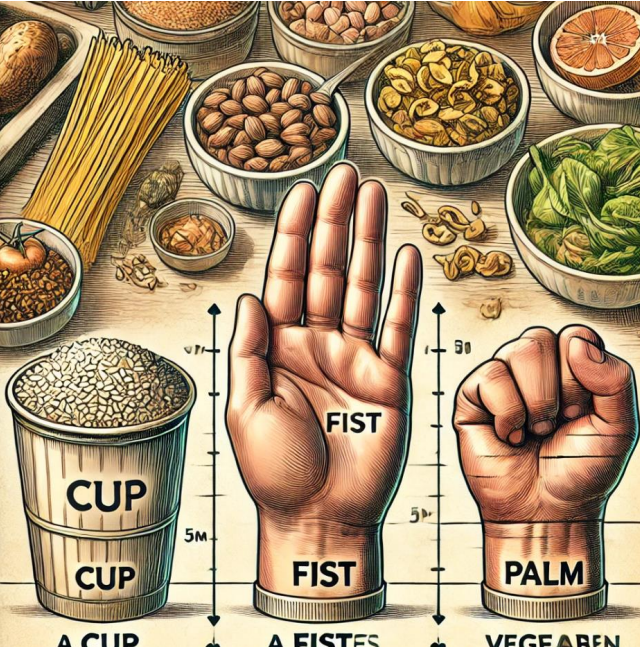
Measuring food by touch instead of with a scale encourages a more natural and mindful connection with what we eat. Feeling the texture and weight of the ingredients stimulates the senses and reduces stress linked to getting quantities exactly right. Over time, the body develops muscle memory that helps to estimate portions intuitively. This approach, which involves touch and the use of simple tools such as spoons or cups, makes the preparation of food more relaxing, creative and mindful, improving the pleasure of cooking and eating.
1. Touching food strengthens the sensory connection
Feeling the weight, texture and shape of food with your hands
improves awareness of food and stimulates connection
with what you eat, engaging your senses before the meal.
2. Reduces the pressure to be perfectly precise
Using spoons, fists or visual estimates avoids anxiety related to
having to be perfect with gram measurements, making the meal a
more relaxing and pleasant moment.
3. Activates muscle memory
Over time, learning how to recognize quantities using your hands or
common objects (spoons and cups) trains the brain to estimate
appropriate portions intuitively.
4. Improves portion awareness
Measuring with sensory methods, such as the size of your fist or the volume of a
cup, provides a clearer perception of the quantity
of food being prepared and consumed.
5. Involves the sense of touch
Touch is a powerful ally in the perception of freshness,
temperature and food quality, increasing
satisfaction even before tasting.
6. Makes food more accessible
Using your hands, spoons or cups eliminates the need for
specific tools (such as a scale), making the process more practical and
suitable for every context.
7. Encourages intuitive eating
This practice helps you to “feel” the right portions, developing an
intuitive and natural relationship with food, based on genuine needs of the
body.
8. Encourages a mindful approach
Focusing on physical contact and observing food
promotes mindfulness, helping to slow down and appreciate each
mealtime.
9. Increases the pleasure of preparation
Measuring with hands or with household items makes the process more
hands-on and enjoyable, evoking a feeling of care and
attention to food.
10. Stimulates creativity
Learning to estimate without technical tools promotes flexibility
and adaptability in the kitchen, leaving more room for creativity and
exploration.
Advantages of measuring with spoons or your fist
• Practicality: it is simple and always available, suitable for every
situation.
• Versatility: suitable for many ingredients (pasta, cereals,
legumes, seeds).
• Intuitiveness: based on visual and tactile methods, facilitating an
immediate understanding of quantities.
• Flexibility: does not require precise tools, perfect for those who
cook on the go or in informal contexts.
Measuring food by touch instead of with a scale encourages a more natural and mindful connection with what we eat, stimulating the cephalic phase of digestion. This phase, which begins with the preparation and anticipation of food, is essential for the proper activation of digestive processes.
Feeling the texture and weight of the ingredients activates the senses and prepares the body to receive the meal. Moreover, reducing the pressure to achieve exact quantities helps develop a more relaxed relationship with food, improving pleasure and awareness at every stage of the meal.