
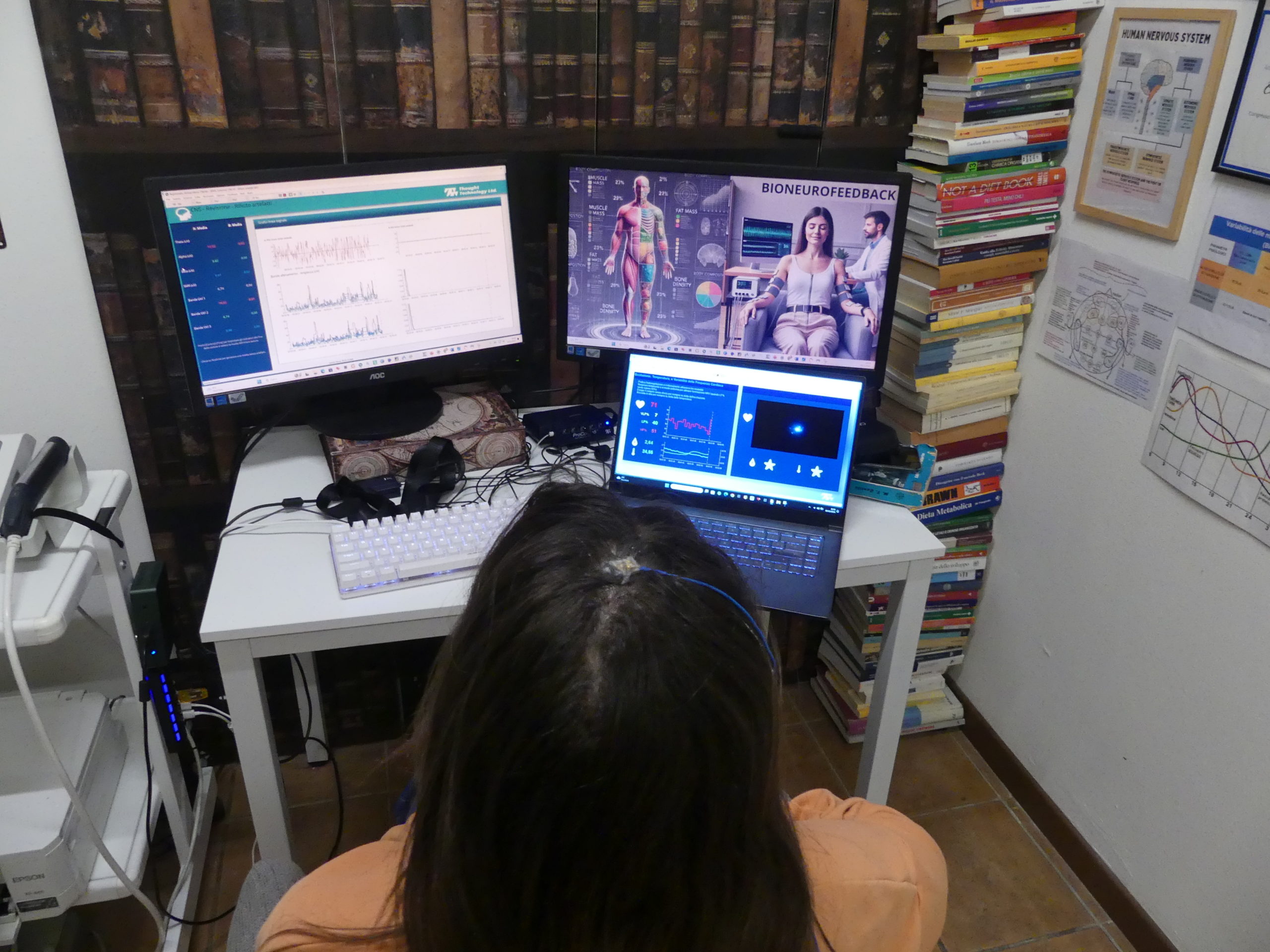
NEUROFEEDBACK MONITORING
1. Communication with the person
a) Introduction and explanation of the process:
-
Present neurofeedback in a simple way: “This method allows us to monitor brain activity and train you to regulate it to improve relaxation, concentration and emotional regulation. It’s a safe, non-invasive technique.”
b) Use of a calm tone of voice and positive body language:
-
Keep a calm and reassuring tone: “The goal is to create a calm environment where you can relax.”
-
Use welcoming body language (slow movements, relaxed posture) to convey confidence.
c) Objective of the session:
-
Define the purpose: “Today we will focus on brain wave training to improve concentration and reduce any tension or stress.”
d) Request for consent:
-
Ask for permission to apply the sensors: “To proceed, I will apply electrodes on the scalp to detect brain activity.”
e) Preliminary instructions:
-
Invite the person to relax: “During the session, sit comfortably and follow my directions.”
-
Ask to remove metal objects or jewelry.
2. Preparation of the environment
-
Make sure the room is quiet, with soft lighting and without distractions.
-
Seat the person in an ergonomic armchair or a comfortable chair.
3. Sensor application
a) EEG sensors:
-
Objective: monitor brain activity in real time.
-
Application:
-
Clean the relevant areas of the scalp with an alcohol wipe to ensure good contact.
-
Place the electrodes at the target sites (e.g. frontal region for concentration, occipital areas for relaxation).
-
Make sure the cables are well connected to the device.
-
b) Heart Rate Sensor:
-
Objective: detect heart rate and sync it with brain activity.
-
Application:
-
Attach the sensor to a finger or the earlobe with a clip.
-
c) Breathing sensor:
-
Objective: monitor the respiratory rhythm.
-
Application:
-
Place an elastic band around the chest or abdomen.
-
4. During the application
a) Explain each step:
-
Keep the person informed about what you are doing: “I will now apply sensors to monitor brain waves. You won’t feel pain, just a slight pressure.”
b) Ask for feedback:
-
Make sure the sensors are comfortable: “If something bothers you, tell me immediately.”
c) Check the signals:
-
Check that the software correctly records brain waves.
-
Run a brief test, asking the person to relax or do a simple mental task.
5. Conclusion of the preparation
a) Confirm that the person is ready:
-
“We are now ready to begin the session. I will guide you through the exercises and together we will observe how your brain responds.”
b) Start the session:
-
Provide continuous feedback on progress, showing brain wave charts on the monitor.
-
Keep a reassuring tone and check the person’s comfort throughout the session.
This approach ensures accurate preparation and an optimal experience for the person, maximizing the benefits of the ProComp Infiniti neurofeedback system.