Siegel’s Window of Tolerance
Siegel’s Window, also known as the Window of Tolerance, is a model that explains how we respond to stress and how the nervous system can be regulated to maintain an optimal state of balance.
What Does It Represent?
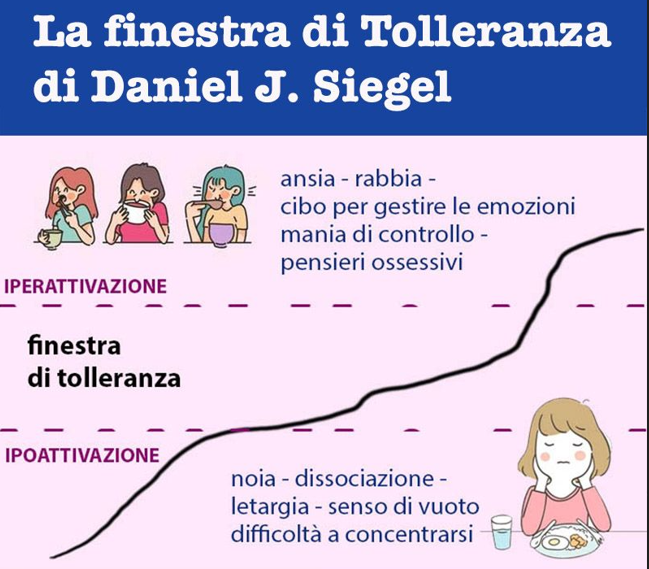
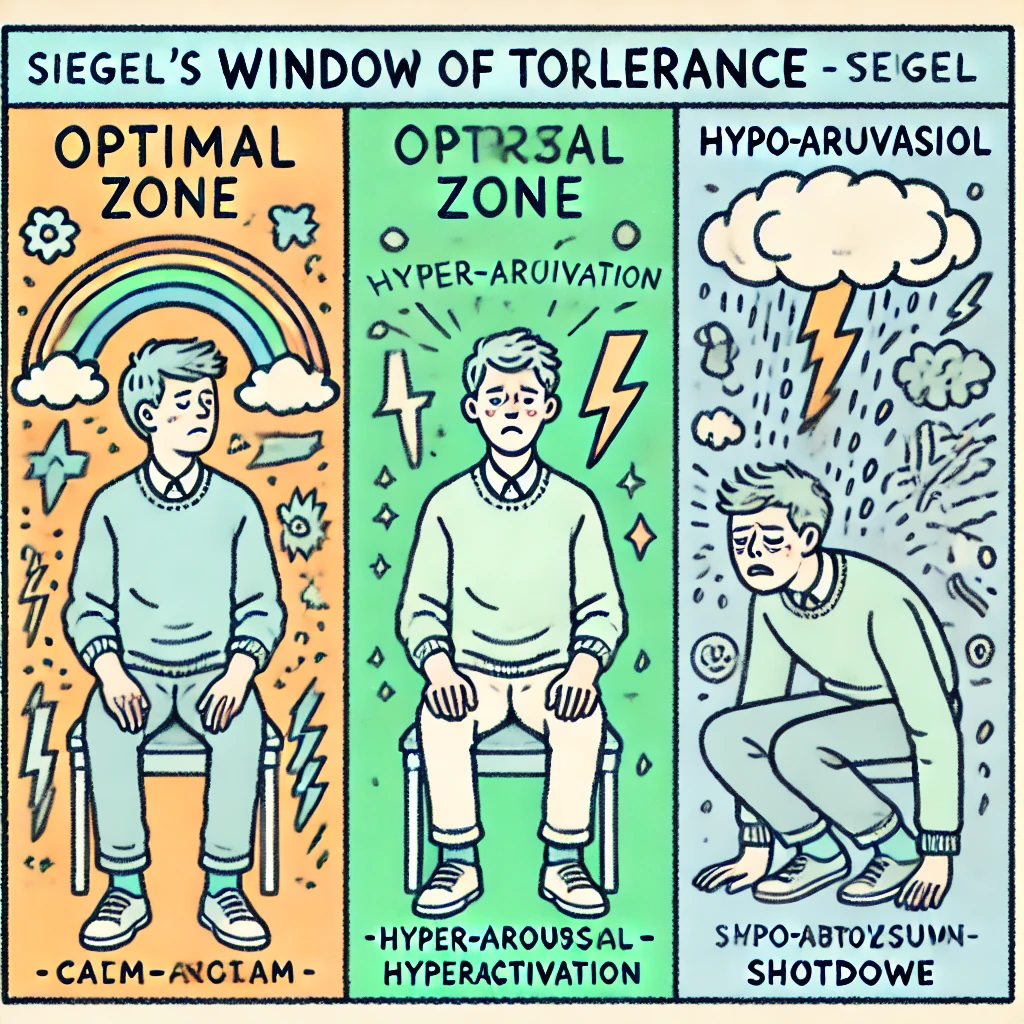
Imagine a window with three zones:
-
Window of Tolerance (at the center):
- It is the optimal zone where we feel calm, focused and able to function effectively.
- Here the body and mind are in balance: we face everyday situations with serenity.
-
Hyperarousal (above the window):
- It’s when we are too stressed or anxious.
- Common reactions: agitation, confused thoughts, rapid heartbeat, muscle tension.
- People tend to seek comfort in food to reduce stress, which may lead to binge eating or impulsive food choices.
-
Hypoarousal (below the window):
- It’s when we are shut down or emotionally numb.
- Common reactions: fatigue, apathy, a sense of emptiness, difficulty in reacting.
- This state can lead to emotional eating, sedentary behavior and overweight due to lack of energy and motivation.
How Does It Affect Eating Disorders and Excess Weight?
- When stress and difficult emotions take us outside the tolerance window, we can use food as a comfort mechanism.
- During hyperarousal, people may eat too quickly or excessively in an attempt to calm themselves.
- During hypoarousal, low energy may lead to inactivity, reliance on highly processed food and weight gain.
How Can We Remain Within the Window of Tolerance?
- Regulation techniques such as deep breathing, muscle relaxation and mindfulness help bring the body back into the Window of Tolerance.
- Regular physical activity and a healthy, balanced diet improve the body’s ability to adapt to stress.
In summary, understanding Siegel’s Window of Tolerance helps us recognize our emotional states and improve stress management, preventing emotions and stress from negatively affecting our relationship with food and body weight.
Nutraceuticals and Biofeedback for Addressing Emotional Eating
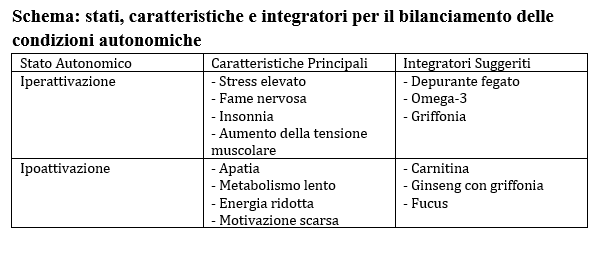
Hyperarousal of the nervous system
- a) Liver-support supplement (dandelion, milk thistle, etc.)
- Role: supports liver function and metabolism of stress hormones, such as cortisol. Improved liver function reduces the toxic burden and systemic inflammation, supporting autonomic relaxation and reducing muscle tension (Rondanelli et al., 2014).
- Emotional eating: improving the body’s ability to manage stress helps reduce episodes of emotional eating and reliance on comfort food.
- (b) Magnesium
- Role: essential for the regulation of the autonomic nervous system. Reduces anxiety and sympathetic hyperactivation, promoting muscle relaxation and improving sleep (Barbagallo & Dominguez, 2010).
- Emotional eating: reduces episodes of emotional eating by reducing stress and the urge to consume foods rich in sugar and carbohydrates.
- c) Omega-3
- Role: EPA and DHA fatty acids modulate systemic inflammation and improve neuronal plasticity, supporting emotional balance and reducing stress response (Krawczyk et al., 2019).
- Emotional eating: they stabilize the mood, reducing the need to resort to food as a self-regulation mechanism.
- d) Griffonia simplicifolia
- Role: natural source of 5-HTP, precursor of serotonin, which regulates mood and reduces the hyperactivation of the autonomic nervous system (Birdsall, 1998).
- Emotional eating: regulates appetite and reduces compulsive urges to eat associated with anxiety and negative emotions.
4.2 Hypoarousal of the nervous system
- a) Carnitine
- Role: stimulates the production of cellular energy in mitochondria, improving metabolism and counteracting apathy and chronic fatigue typical of states of hypoarousal (Onofrj et al., 2013).
- Emotional eating: reduces the tendency to seek high-calorie foods to compensate for lack of energy, favoring a more balanced energy regulation.
- b) Ginseng with Griffonia
- Role: ginseng acts as an adaptogen, improving vitality and cognitive function, while griffonia regulates mood, favoring recovery from states of low motivation and apathy (Reay et al., 2005).
- Emotional eating: together, they reduce cravings for comfort foods related to low energy and depressed mood, promoting more mindful food choices.
- c) Fucus
- Role: iodine-rich seaweed that stimulates thyroid function and basal metabolism, improving energy levels and counteracting the slower metabolism associated with hypoarousal (Clark et al., 2003).
- Emotional eating: supports a more efficient metabolism, reducing the need to consume carbohydrates to compensate for chronic fatigue.