The impact of RSA on eating behaviour and mental health
RSA and the regulation of eating behaviour: managing hunger, stress and emotions
What RSA is and why it matters
RSA (respiratory sinus arrhythmia) is a natural variation in heart rate that is synchronised with breathing:
-
Inhalation: the heartbeat increases slightly.
-
Exhalation: the heart rate slows.
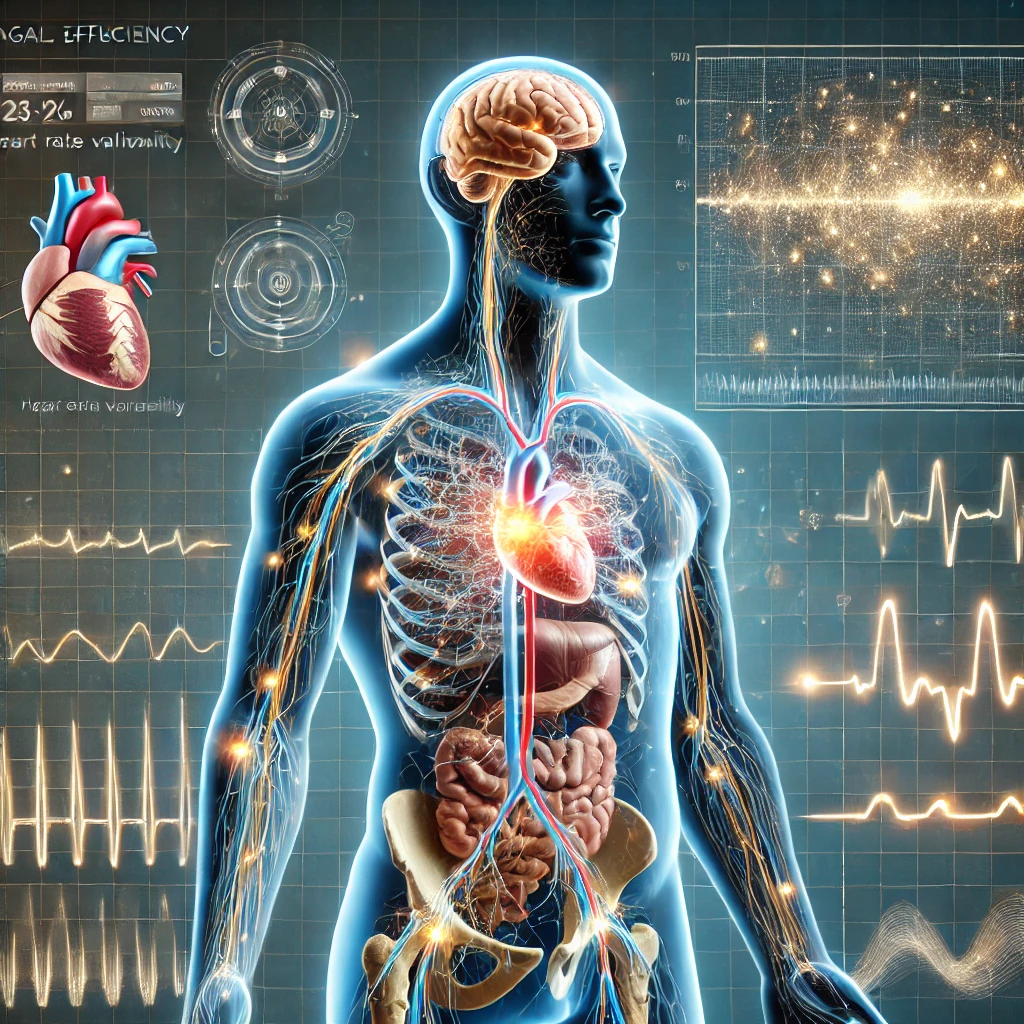
This phenomenon reflects the interaction between the respiratory and cardiovascular systems, regulated by the vagus nerve. It is a key indicator of vagal tone: the vagus nerve’s ability to regulate the autonomic nervous system.
-
Vagal tone measured through RSA: RSA shows how breathing and heart rate variability (HRV) become synchronised during slow breathing, optimally at about 6 cycles per minute, producing the resonance phenomenon.
-
Children and RSA: A stable RSA is associated with better social adaptation and reduced disruptive emotional responses (Calkins & Keane, 2004). By contrast, low RSA is linked to behavioural difficulties (Blair & Peters, 2003).
How to improve RSA and vagal efficiency
-
Slow diaphragmatic breathing:
-
Breathe slowly, inhaling for 4–6 seconds and exhaling for 6–8 seconds.
-
Breathing at 6 cycles per minute optimizes the resonance phenomenon.
-
-
Moderate physical exercise:
-
Activities such as yoga, walking or swimming help improve vagal tone and HRV.
-
-
Relaxation techniques:
-
Mindfulness, meditation and progressive muscle relaxation reduce stress and improve RSA suppression.
-
-
Cold baths:
-
They directly stimulate the vagus nerve and increase its efficiency.
-
-
Singing and vocalisations:
-
Humming or singing stimulates the vagus nerve through vibrations in the larynx.
-
-
Healthy nutrition:
-
A diet rich in probiotics and anti-inflammatory foods supports the gut microbiota, indirectly improving vagal tone.
-
RSA suppression is the nervous system’s ability to temporarily reduce RSA in response to stressful situations or changes. It is a crucial indicator of vagal efficiency, reflecting the body’s flexibility and capacity to adapt.
-
In children:
-
Low RSA suppression is associated with social withdrawal, hostility and conflict (Sacco & Testa, 2012).
-
In 24-month-old children, difficulties with RSA suppression are associated with relationship problems and behavioural distress (Buss et al., 2005).
-
-
In adults:
-
Low suppression is associated with social anxiety, defensive behaviour and reduced capacity for emotional adaptation (Movius & Allen, 2005).
-
Both parameters are fundamental and complementary:
-
Stable RSA supports the baseline regulation of autonomic functions.
-
RSA suppression supports an adaptive response to external stimuli.
A good balance between high RSA and effective RSA suppression is crucial for physical and emotional well-being. While high RSA reflects healthy vagal tone and better autonomic regulation, the ability to suppress RSA enables rapid adaptation to stress or environmental changes. This balance supports more effective emotional regulation, lower stress and more resilient behaviour. Improving both aspects is essential for physiological stability and social adaptation, with positive effects on mental health, relationships and overall well-being. RSA suppression: why it matters
Vagal efficiency: what it is and how it is measured
Vagal efficiency is the ability of the vagus nerve to regulate autonomic functions such as heart rate, breathing and digestion. This process is crucial for maintaining internal balance (homeostasis).
-
Key indicators of vagal efficiency:
-
High RSA: reflects a healthy vagal tone.
-
HRV (heart rate variability): high HRV is associated with a greater capacity for regulation.
-
RSA suppression: the body’s flexible response to environmental or emotional changes.
-
-
Role of the vagus nerve: it connects the brain to vital organs such as:
-
Heart: modulates the heartbeat.
-
Lungs: regulate breathing.
-
Digestive system: supports peristalsis and digestion.
-
Liver and kidneys: influence metabolism and energy regulation.
-
Benefits of improving RSA and vagal efficiency
-
Emotional:
-
Reduced anxiety and increased emotional control.
-
Improved management of stress and social reactivity.
-
-
Physical:
-
Improved cardiovascular health and digestion.
-
Greater capacity to regulate inflammatory responses.
-
-
Behavioral:
-
In children, stable RSA and good suppression promote healthy social relationships and reduce disruptive emotional responses.
-
In adults, they help prevent social anxiety and defensive behavior.
-
Effects of RSA and vagal efficiency on eating behaviour
RSA and vagal efficiency play a fundamental role in regulating eating behaviour, influencing both the physiological control of hunger and the emotional balance associated with food. Healthy vagal tone improves communication between the brain and the digestive system through the vagus nerve, supporting a clearer perception of hunger and satiety signals. This can help reduce overeating, emotional eating and eating dysregulation.
In addition, high vagal efficiency helps manage stress, which often triggers dysfunctional eating habits such as binge eating or consuming high-calorie foods to compensate for negative emotional states. Low RSA or poor RSA suppression, by contrast, is associated with a greater risk of eating disorders because the body struggles to modulate physiological and emotional responses during stress or anxiety.
Conclusion
RSA and vagal efficiency are fundamental to physical, emotional and behavioural well-being. Healthy vagal tone, together with good RSA and the ability to suppress it effectively, allows the body and mind to respond flexibly to everyday challenges and improves the regulation of stress, emotions and behaviour.
Improving these factors through simple practices—such as diaphragmatic breathing, relaxation, moderate exercise and a balanced diet—not only promotes better health but also helps prevent relationship, emotional and eating difficulties. Monitoring RSA and strengthening vagal efficiency are therefore key strategies for achieving a stable, resilient and sustainable long-term balance.
***CAUTION: REVERSE RSA***
Reverse RSA occurs when heart rate accelerates during exhalation and slows during inhalation, reversing the normal physiological pattern. This phenomenon is considered abnormal and may indicate changes in the autonomic nervous system or other regulatory mechanisms. Possible causes include autonomic nervous-system dysfunction, in which an imbalance between the sympathetic and parasympathetic systems disrupts heart-rate regulation. Autonomic neuropathies or neurodegenerative disorders such as Parkinson’s disease may underlie this condition. Cardiac disorders, including congestive heart failure or sinoatrial-node dysfunction, may also affect RSA. Respiratory disorders such as obstructive sleep apnoea or chronic lung diseases such as COPD alter the interaction between the heart and breathing and may contribute to the phenomenon. In some cases, reverse RSA may be temporary and occur during intense stress, fatigue or certain stages of childhood development. Vagal or cardiac surgery and medicines including beta-blockers or sedatives may temporarily alter RSA regulation. Finally, central nervous-system conditions such as stroke or head injury can disrupt communication between the brain and the heart. Reverse RSA is therefore a possible sign of regulatory dysfunction and requires careful clinical assessment to identify and address the underlying cause.