
The Relationship Between the Brain and Mental Disorders
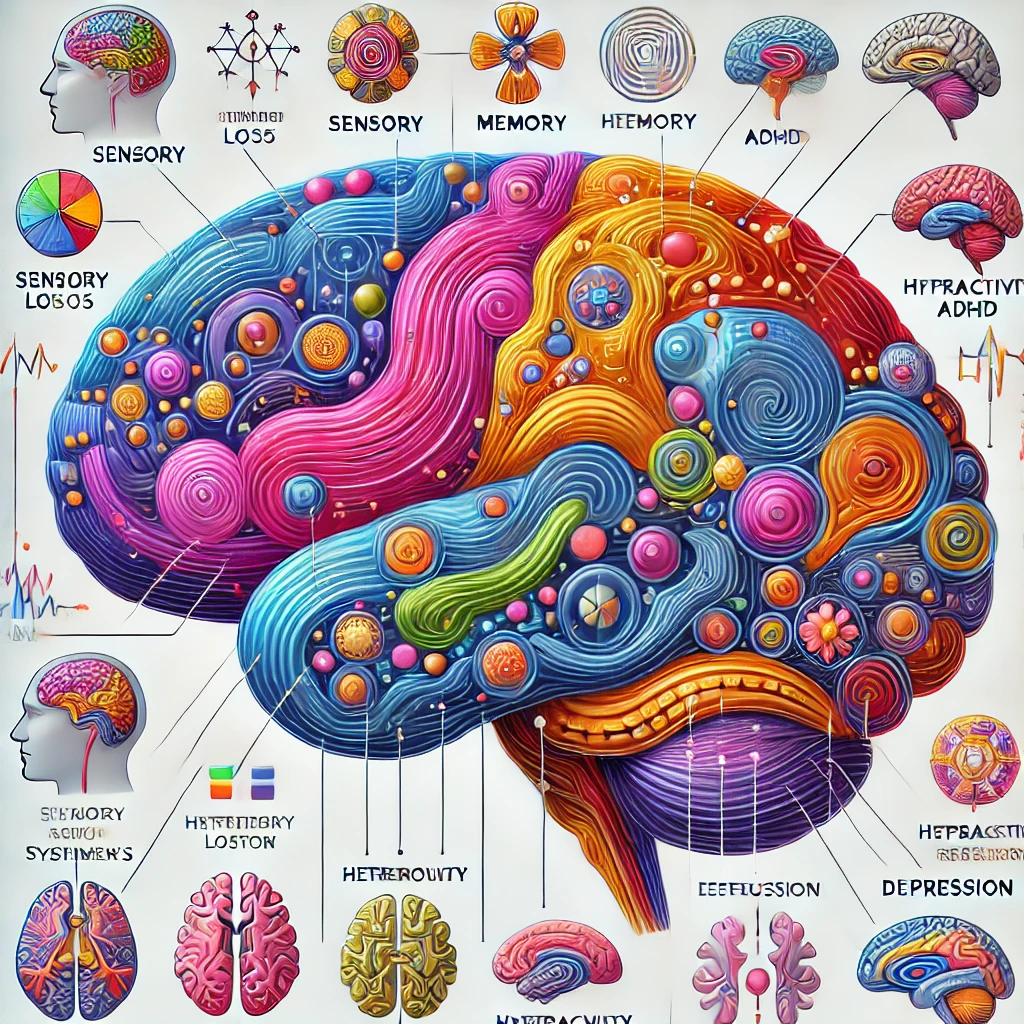
How Brain Systems Influence Neurological and Psychiatric Disorders
The brain is a complex organ that manages many essential functions, including perception, memory, emotion and executive control. When one of these major brain systems is altered, specific psychiatric or neurological disorders may emerge. This overview shows how particular brain systems are involved in conditions such as dyslexia, depression, schizophrenia and Alzheimer’s disease. Understanding these associations is essential for developing targeted diagnostic and therapeutic strategies and thereby improving patients’ quality of life. Each disorder is examined in relation to the brain system involved and the functions affected, providing a clear picture of the links between biology and behavior.
1. Major Brain Systems and Related Functions:
-
Sensory:
- System responsible for processing sensory stimuli (touch, vision, hearing, etc.).
- Related conditions: dyslexia and spatial neglect.
-
Memory:
- System involved in the storage and retrieval of information.
- Related conditions: Alzheimer’s disease and other memory disorders.
-
Affective:
- Involved in processing emotions and regulating mood.
- Related conditions: depression, anxiety, schizophrenia.
-
Executive:
- System responsible for planning, organizing and controlling actions.
- Related conditions: ADHD (attention-deficit/hyperactivity disorder), OCD (obsessive-compulsive disorder) and addictions.
2. Psychiatric and Neurological Disorders:
-
Dyslexia:
- Alterations in the sensory system, often associated with difficulty processing visual or linguistic stimuli.
-
Neglect:
- Dysfunction of the sensory system, with difficulty perceiving or reacting to stimuli on one side of space (usually the side opposite the brain lesion).
-
Depression:
- Involves the affective system and changes in mood and emotion.
-
Anxiety:
- Related to the affective system; characterized by excessive worry and emotional hyperactivation.
-
Alzheimer’s Disease:
- A neurodegenerative disease that primarily impairs memory.
-
Parkinson’s Disease:
- A disorder involving motor function and, in some cases, cognition and memory, often associated with dopaminergic dysfunction.
-
Schizophrenia:
- Involves the affective and executive systems and is characterized by symptoms such as delusions, hallucinations and disorganization of thought.
-
OCD (Obsessive-Compulsive Disorder):
- Associated with dysfunction of the executive system and characterized by obsessive thoughts and compulsive behaviors.
-
ADHD:
- A disorder of the executive system characterized by difficulty concentrating, impulsiveness and hyperactivity.
-
Addiction:
- It involves the executive system and is characterized by compulsive behaviors involving substances or activities.
Conclusion:
This classification helps explain how different brain systems underlie specific disorders. Understanding these associations is essential for developing targeted treatments that address dysfunctional systems, relieve symptoms and improve patients’ cognitive and behavioral abilities.